The Fancyfied journal · Feature essay

Verti-grated™A conglomerate stacks. A system syncs.

What if the greatest competitive advantage in business isn't how much you own, but how intelligently everything you own, or influence, works together?

By Lisa FrancoeurFounder, Fancyfied™

That question led me to a concept I've coined Verti-grated™. The word combines vertical and integrated, but the philosophy extends beyond conventional vertical integration.

For decades, corporations have pursued growth through acquisitions, diversification, and consolidation. They've built portfolios of brands, expanded across industries, and acquired control over successive stages of production. But ownership alone does not guarantee synergy.

A company can own a dozen businesses and still operate as twelve disconnected enterprises. Conversely, a thoughtfully designed ecosystem can connect distinct products, services, technologies, and partners so effectively that each strengthens the performance of the others. That is the distinction at the heart of Verti-gration.

Definitions

Verti-grated™ (adjective): Describes a deliberately interconnected business architecture in which distinct products, services, brands, or capabilities reinforce one another through shared infrastructure, coordinated operations, customer journeys, or complementary value creation.

Verti-gration (noun): The strategic process of designing and coordinating those interdependencies to generate greater collective value than the individual components could produce independently.

In simpler terms: a conglomerate stacks. A Verti-grated system syncs.

From Vertical Integration to Verti-gration

Vertical integration

Controlling multiple stages of a supply chain or production process, such as manufacturing, distribution, and retail.

Horizontal integration

Expanding a company's position across similar products, businesses, or markets.

Conglomerate diversification

Bringing multiple, sometimes unrelated, businesses under common ownership.

Business ecosystem strategy

Examining how interconnected organizations and complementary offerings create value together.

Verti-gration builds on these established ideas while introducing a specific architectural question: are the relationships between the components deliberately designed to create reinforcing value?

It isn't enough for businesses to share a parent company. It isn't even enough for their products to occupy adjacent markets. The critical question is whether their connections improve the performance, utility, efficiency, reach, or economic potential of the system.

Consider a business that owns an educational platform, a media company, an events operation, and a technology product. If each operates independently, the owner has a diversified portfolio. But imagine the educational platform generates insights that inform the media company's content. That content attracts audiences to events. The events create demand for the technology product. The product generates customer insights that improve the educational platform. Now the businesses aren't merely adjacent. They're reinforcing one another. That's Verti-gration.

Importantly, this doesn't mean every component must directly interact with every other component. It means the architecture creates meaningful connections that increase the value of the whole. To understand the principle, consider five business models that illuminate different dimensions of Verti-gration.

Ford: The Architecture of Flow
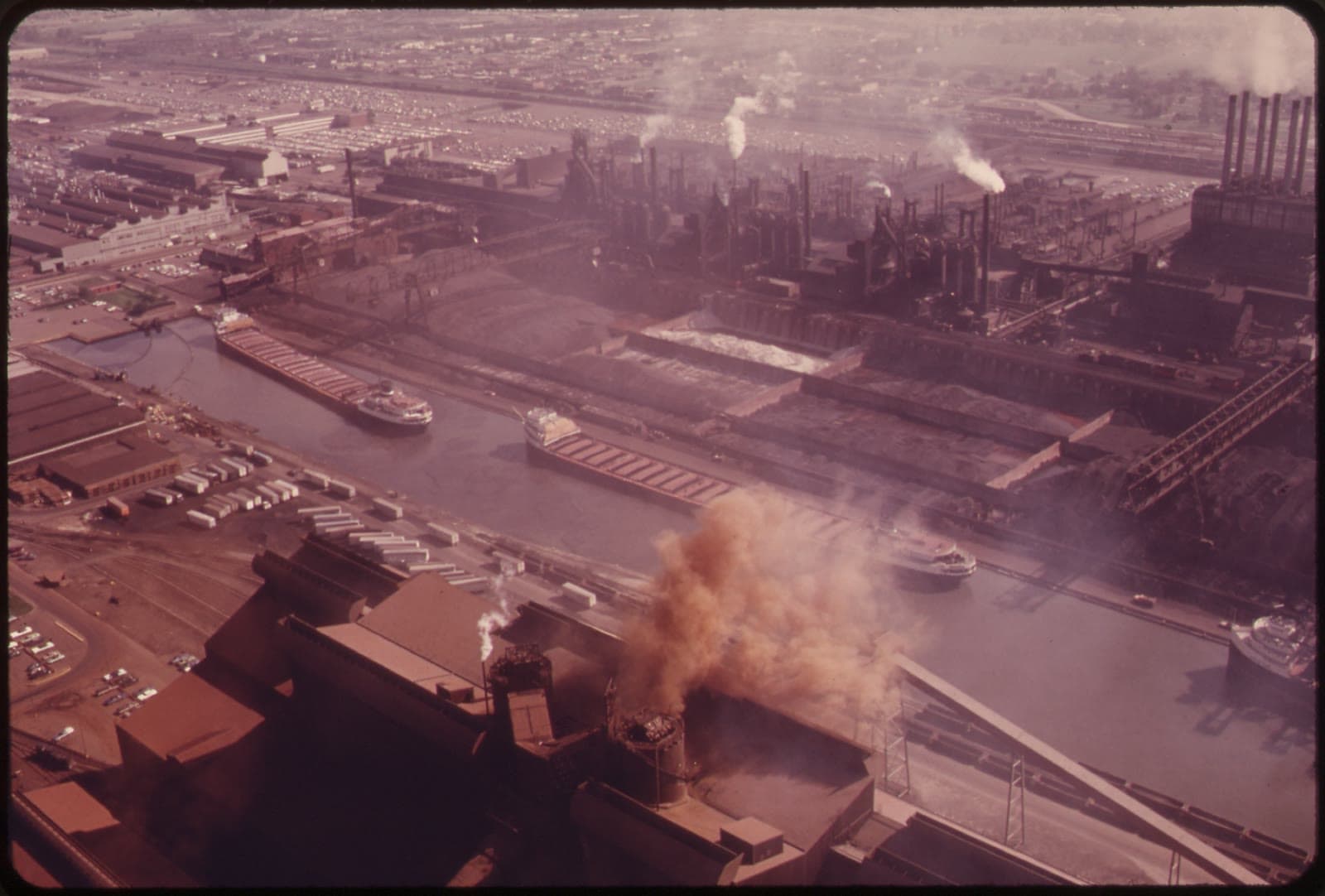
Aerial view of the Ford River Rouge plant complex in Dearborn, Michigan
Ford's River Rouge complex in Dearborn, Michigan: a landmark example of coordinating industrial processes from raw materials to finished automobiles.Photo: Joe Clark, U.S. National Archives (public domain)

Henry Ford understood something profound about industrial efficiency: a factory could be more than a collection of production facilities. It could be an interconnected operating system.

Developed primarily between 1917 and 1928 in Dearborn, Michigan, Ford's River Rouge complex brought an extraordinary range of industrial processes together.

Raw materials arrived through transportation infrastructure connected to the complex. Steelmaking, glass production, power generation, manufacturing, and vehicle assembly operated within a coordinated industrial environment.

The complex achieved its celebrated ore-to-assembly capability in 1927 with production of the Model A.

At its height, the Rouge employed more than 100,000 people and produced approximately 4,000 vehicles daily, according to The Henry Ford's historical account.

The significance wasn't simply that Ford owned manufacturing assets. It was that the assets were arranged to support a continuous industrial process. Transportation fed production. Production fed assembly. Infrastructure supported the entire operation.

Ford's ambition was to reduce interruptions, dependencies, and inefficiencies between successive stages.

The Verti-grated lesson

Integration becomes strategically powerful when the connections between operations are designed to improve the performance of the whole.

River Rouge is fundamentally a landmark example of vertical integration. Through the Verti-gration lens, it also illustrates how deliberately coordinated infrastructure and processes can create reinforcing operational value. Ownership provided control. Architecture created flow.


Sears: When Diversification Outruns Integration

Historic Sears, Roebuck and Company store exterior in Minneapolis, Minnesota
Sears expanded from retail into financial services, illustrating the distinction between diversified ownership and a truly interconnected business architecture.Photograph: Hennepin County Library (public domain)

In the early 1980s, Sears attempted to extend its position beyond department-store retailing into a broad consumer financial-services enterprise.

Already the owner of Allstate Insurance, Sears acquired Dean Witter Reynolds and Coldwell Banker in 1981. It subsequently introduced the Discover credit card in 1985.

The strategy envisioned a corporation capable of serving multiple aspects of consumers' financial and purchasing lives.

On paper, the possibilities were considerable. A customer could purchase household products, obtain insurance, access brokerage services, and participate in real estate transactions through businesses connected by common ownership.

But common ownership did not automatically translate into an integrated customer experience or sufficiently compelling operating synergies.

During the 1990s, Sears dismantled much of that diversified structure. In 1993, it spun off Dean Witter Discover, sold Coldwell Banker, and publicly sold approximately 20% of Allstate. In November 1994, it announced plans to distribute its remaining Allstate stake, completing that separation in 1995.

It's important to distinguish between the performance of the financial businesses and the success of the overall corporate architecture. Several of Sears' financial-services operations created substantial economic value. Their eventual separation was not proof that every acquisition had failed.

Rather, the restructuring illustrates an important strategic question: did combining these businesses under one parent create enough additional value to justify keeping them together? That question is central to Verti-gration.

The Verti-grated lesson

Adjacency is not interoperability. Diversification can create valuable individual businesses without creating an equally valuable interconnected system.

Sears demonstrates why a company should evaluate not only the value of its assets, but the incremental value produced by their relationships. A portfolio can be profitable without being deeply integrated. And an integrated architecture must earn its complexity.

Apple: The Power of a Shared Platform

A desk with a MacBook, iPhone, and other Apple devices arranged together
Apple's coordinated hardware, software, silicon, and services demonstrate how distinct products can reinforce one another within a shared ecosystem.Photo: Niklas Veenhuis (CC0)

Apple provides one of the clearest contemporary examples of a deliberately coordinated product ecosystem.

Its competitive position isn't built on a single device. It's built on relationships between devices, operating systems, proprietary silicon, services, software, and customer identity.

An iPhone can interact with a Mac. An Apple Watch extends functions associated with the iPhone. AirPods work across compatible Apple devices. iCloud supports continuity across products, while services such as Apple Music, Apple Pay, and the App Store create additional utility.

Apple doesn't operate one universal operating system. It maintains a coordinated family of platforms, including iOS, iPadOS, macOS, watchOS, visionOS, and tvOS. Similarly, its silicon strategy uses different chip families optimized for different product categories. The strategic advantage comes from their coordination.

$416.2B

Apple FY2025 net sales

$109.2B

Services revenue

Services accounted for approximately 26.2% of Apple's fiscal 2025 net sales. Source: Apple Form 10-K.

The Verti-grated lesson

Shared infrastructure can turn individual products into complementary parts of a larger customer experience.

The significance extends beyond the size of that business. Apple's installed base of devices creates opportunities for services adoption. Services can deepen the utility of devices. Shared software and identity infrastructure reduce friction as customers move between products.

The result is a system in which individual products can become more useful through their participation in the broader ecosystem.

Apple illustrates the importance of what I call the platform spine: the common capabilities, systems, and interfaces that enable otherwise distinct products to work together. The spine doesn't have to be one operating system or one technology. It has to create meaningful coordination.

Tesla: When an Ecosystem Gains External Gravity

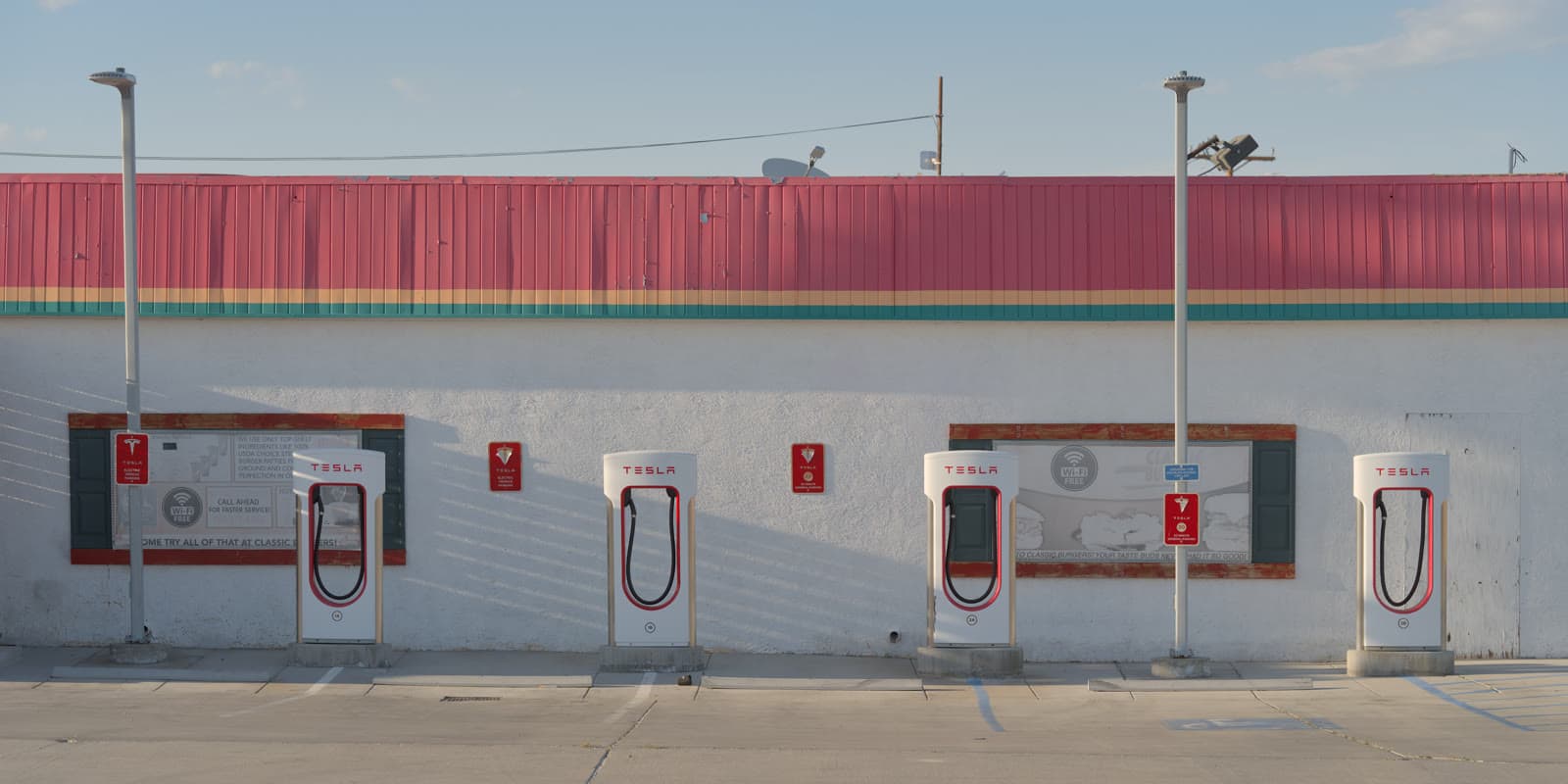
Four Tesla Supercharger stalls with vehicles charging in Inyokern, California
Tesla's charging infrastructure demonstrates how an internally developed ecosystem can become valuable to external manufacturers and customers.Photo: Daniel Lu (CC BY-SA 4.0)

Tesla's business extends beyond electric vehicles. It includes vehicle software, charging infrastructure, energy storage, and related technologies. These operations are not identical, and not every product depends directly on every other one.

But Tesla's vehicle and charging ecosystem provides an especially revealing example of how integration can produce value beyond a company's immediate customer base.

In November 2022, Tesla announced that it was opening its North American Charging Standard, or NACS, connector design for broader industry adoption.

In May 2023, Ford announced an agreement that would give eligible Ford electric-vehicle customers access to Tesla Superchargers and introduce NACS connectors in future vehicles. General Motors followed with a similar announcement in June 2023. The connector was subsequently formalized through SAE J3400.

A technical distinction matters here: the charging connector standard is not identical to the communications and payment systems that authorize charging sessions. Interoperability requires coordination across several layers.

Nevertheless, the strategic significance is unmistakable. Infrastructure originally developed to support Tesla's vehicle ecosystem became valuable to other manufacturers and their customers. Tesla's charging network was no longer solely a supporting asset for Tesla vehicles. It was also infrastructure that external participants wanted to access.

The Verti-grated lesson

An interconnected system can create value beyond its original boundaries, attracting third parties to infrastructure that was initially developed for internal advantage.

I call this ecosystem gravity. Gravity emerges when the usefulness, reach, or capabilities of an integrated system make participation attractive to outside organizations. Not every Verti-grated enterprise will establish an industry standard. But the strongest systems may become platforms that others choose to build upon.

EssilorLuxottica: The Multi-Brand Consumer Ecosystem

Ray-Ban Meta Gen 1 smart glasses positioned in front of their brown leather charging case
EssilorLuxottica connects eyewear design, optical technology, consumer brands, retail distribution, and strategic partnerships, including its collaboration with Meta.Photo: CCadio (CC BY 4.0)

If Ford demonstrates industrial flow, Apple demonstrates a platform spine, and Tesla demonstrates ecosystem gravity, EssilorLuxottica offers a particularly compelling example of coordinated capabilities across an extended customer journey.

The company brings together major capabilities in optical lenses, eyewear design, manufacturing, branded products, retail distribution, and vision benefits. Its portfolio includes Essilor lens technologies, eyewear brands such as Ray-Ban and Oakley, retail operations including LensCrafters and Sunglass Hut, and EyeMed vision benefits.

Consider the possibilities within this architecture. A consumer's experience may involve vision coverage, an eye examination, prescription lenses, frames, and retail services connected through businesses within the same corporate group. Not every customer uses every part of the system, and these relationships do not eliminate the involvement of independent providers or external partners. But the architecture offers multiple opportunities for coordinated value creation.

Then artificial intelligence entered the picture. Since 2019, EssilorLuxottica and Meta have collaborated on smart eyewear, combining capabilities in product design, optics, distribution, and technology. Their partnership produced Ray-Ban smart glasses and expanded into additional generations of connected eyewear. In September 2024, the companies announced an extended agreement to collaborate into the following decade.

The strategic implication is especially interesting. EssilorLuxottica's combination of design expertise, optical technology, manufacturing capabilities, brand equity, and distribution infrastructure made it a valuable partner for a technology company entering the eyewear category. Meta did not need to own EssilorLuxottica to participate in the system. The companies could combine complementary capabilities through partnership.

The Verti-grated lesson

An integrated enterprise can become more valuable not only through its internal connections, but through the external partnerships those connections make possible.

This reveals an essential distinction. Verti-gration does not require every participant to share a corporate owner. What matters is the intentional coordination of complementary capabilities.

The Verti-gration Framework: Five Dimensions of an Interconnected Enterprise

How can an entrepreneur, executive, or investor determine whether a company is genuinely building an interconnected system rather than accumulating assets? I propose five dimensions.

1. Flow

Does the output, knowledge, infrastructure, or capability of one operation strengthen another?

Ford's River Rouge demonstrates physical production flow. In a digital enterprise, flow might involve customer insights informing product development or educational content generating demand for additional services.

2. Spine

Is there a shared technological, operational, informational, or commercial foundation connecting the system?

Apple illustrates how coordinated platforms, identity systems, and services can connect distinct products. A spine can consist of shared data, technology, distribution, operations, or brand infrastructure.

3. Journey

Can customers move between offerings in ways that create additional utility, convenience, or value?

EssilorLuxottica illustrates how related capabilities can support multiple stages of a consumer's experience. The goal is not to trap customers inside an ecosystem. It's to make the connected experience more valuable.

4. Gravity

Does the system attract customers, collaborators, developers, or commercial partners because of capabilities they would find difficult or costly to replicate independently?

Tesla's charging infrastructure illustrates how an internally developed capability can gain external relevance.

5. Interdependence

Do the relationships between components create measurable additional value?

This is what I call the Sears test. If a business unit were separated from the rest of the organization, what value would disappear? Would customer acquisition become more expensive? Would product utility decline? Would distribution weaken? Would another unit lose access to critical capabilities? Or would the businesses perform just as well independently? A system can create real synergy without every unit being indispensable. The objective is not maximum dependency. It is productive interdependence.

Together, these five dimensions form the foundation of the proposed Verti-gration Index™. The framework is intended as a strategic diagnostic, not yet as a statistically validated measure of corporate performance. Its purpose is to help leaders identify where connections create value, where fragmentation introduces friction, and where additional integration may, or may not, be worthwhile.

Because more integration isn't automatically better. Poorly designed integration can increase complexity, constrain innovation, and create unnecessary dependencies. The goal is not to connect everything indiscriminately. The goal is to connect what creates value.

Why Verti-gration Matters in the Age of AI

Artificial intelligence makes this conversation increasingly relevant. As organizations adopt AI systems, automation, and agentic technologies, the opportunity to coordinate formerly disconnected operations expands.

Information generated in one part of a business can potentially inform decisions elsewhere. Customer insights can influence content strategy. Content can support education. Education can drive product adoption. Product interactions can generate new insights that improve the next iteration of the system.

But technology alone does not create Verti-gration. Connecting databases, automating workflows, or deploying AI agents does not guarantee that a business has designed a coherent value-creation architecture. The essential work remains strategic.

Which capabilities should reinforce one another? Where does shared infrastructure improve performance? Which customer experiences become more valuable through coordination? What should remain independent? And where might a partnership create more value than an acquisition?

These are architectural decisions. AI may accelerate the movement of information and execution across an ecosystem, but leadership must determine what the ecosystem is designed to accomplish.

The Fancyfied Experiment: Building a Verti-grated Enterprise

This concept emerged while examining the architecture of my own work. Through Fancyfied, I've developed initiatives spanning personal transformation, education, physical endurance, writing, speaking, emerging technology, and strategic partnerships.

At first glance, those pursuits might appear to be separate ventures. But I've begun thinking about them as components of a larger operating system.

Becoming Her introduces the principles of identity, self-awareness, and intentional transformation. The Fancyfied TRI Challenge brings those principles into physical practice through endurance, discipline, and personal accountability. My speaking engagements translate these ideas into experiences for broader audiences and organizations. My work in emerging technology creates opportunities to connect human development with the capabilities of AI and the digital economy. Future publications, educational programs, and strategic partnerships can extend those ideas into new formats and markets.

The opportunity is to design deliberate connections among these initiatives. Educational content can inform workshops. Workshops can generate insights for future publications. Speaking engagements can introduce audiences to programs. Programs can produce experiences and outcomes that inform the next generation of content. Partnerships can expand distribution and access.

This is an emerging architecture, not a claim that every connection has already been built or that every potential synergy has been proven. But that is precisely why the concept matters. Verti-gration offers a way to think intentionally about what I'm building before the system reaches its full potential.

Rather than treating every new initiative as an isolated business opportunity, I can ask: How does this strengthen the ecosystem? And how does the ecosystem strengthen it? That question changes how I think about growth.

The Future Belongs to the Architects

The business world has long celebrated scale. More brands. More products. More acquisitions. More markets.

But scale without coordination can create complexity rather than competitive advantage. The next question for founders and corporate leaders isn't simply how much an organization can own. It's how intelligently its capabilities can work together.

Ford demonstrated the power of coordinated industrial flow. Sears illustrated the limits of assuming diversification automatically creates corporate synergy. Apple demonstrated the commercial possibilities of a shared product ecosystem. Tesla showed how integrated infrastructure can attract external participants. EssilorLuxottica revealed how complementary capabilities across brands, distribution, and technology can support new categories of innovation.

Different businesses. Different industries. Different architectures. One underlying principle: the connections matter as much as the components.

That is the idea behind Verti-gration. Not ownership for ownership's sake. Not diversification disguised as strategy. Not complexity mistaken for scale. But intentional architecture that transforms individual capabilities into a reinforcing system.

Because a conglomerate stacks.A Verti-grated system syncs.

About the framework: Verti-grated™ and Verti-gration are terms introduced by Lisa Francoeur through Fancyfied. The Verti-gration Framework and proposed Verti-gration Index are original formulations drawing on established principles of vertical integration, business ecosystems, strategic complementarity, and corporate synergy. The case studies are interpretive applications of the framework, not claims that the featured companies use or endorse the terminology.

© 2026 Lisa Francoeur / Fancyfied. All rights reserved.

Keep reading

Stay close to the work.

The Journal Dispatch carries new Maxims and feature essays when they're worth sending. Free signup continues on Whop.